
Greeley Previous Residents by Era
The best starting source depends on the era. The recorder index reaches back farther than the modern parcel interface, while directories, census schedules, newspapers, and Sanborn maps show how a place was used or occupied. The table gives a dated research map for one Greeley address.
| Source | Years identified | Where held | What it shows |
|---|---|---|---|
| Recorder index | 1865-present | Weld Clerk and Recorder / EagleWeb | Recorded instruments, parties, dates, legal descriptions |
| Weld census | 1866 | LINC and WCMI | Early names and household symbols |
| City directories | 1871, 1892, 1903, generally annual later runs | Hazel Johnson, LINC, UNC references | Occupant, residence, occupation, business |
| Federal census | 1870, 1880, 1900, 1910, 1920 indexes | LINC, WCMI, NARA copies | Age, relationship, birthplace, household |
| Newspapers and obituaries | 1870-present, selected indexes | LINC, Hazel Johnson, Museums | Death, address, family, civic and legal notices |
| Sanborn maps | 1886-1906 and later local survey years | Library of Congress and local history | Building footprint, use, street context |
| Probate and court | Case-specific | 19th Judicial District | Heirs, representatives, orders, filed documents |
A table row is a research lead, not a guarantee of a surviving scan. Ask the repository for the exact volume, film, box, or case number and keep the access date.
Start a Greeley Previous Residents Search
Open the Weld Property Search with the street, account, parcel, subdivision, block and lot, section-township-range, or API number. Copy the account, parcel, owner, property or situs address, owner mailing address, legal description, and any document-history reception numbers. The legal description is often the strongest bridge to an older record because street numbers and postal labels change.
Do not call the owner mailing address a former residence without another source. It may be a business, representative, PO box, or different parcel. Use the account to select the correct property, then carry the legal description into the recorder and historical sources.
The Weld recording FAQs explain free index access, online image access, and monthly access options.
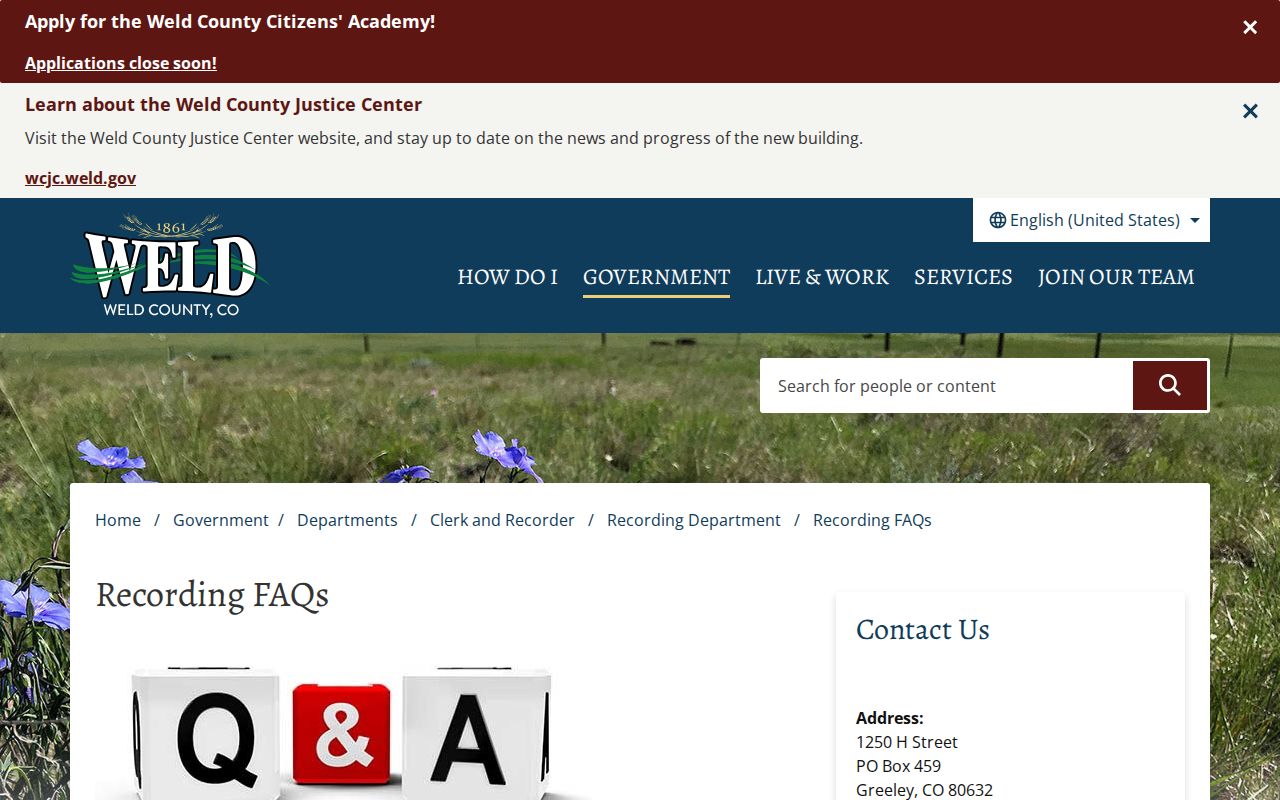
The FAQ screen helps separate an index search from the document image or copy that may be needed to prove a transfer.
Greeley Previous Residents in Deed Records
The latest deed or deed-of-trust entry supplies a grantor, grantee, reception number, recording date, document type, and legal description. Treat the current owner as the grantee in the acquisition instrument, then search that party as a grantor to find the next disposition. Search the earlier seller as a grantee to move one more step back. Repeat with the legal description and reception number to control same-name drift.
- Open the assessor account and preserve the legal description and linked reception number.
- Search the recorder entry and write down every field before opening a related result.
- Follow grantee to grantor, then prior seller to earlier acquisition.
- Try Basic, Advanced, wildcard, spelling, subdivision, block, lot, and date searches if a link stops.
- Order an image or contact Recording when the chain depends on the instrument itself.
A deed of trust, release, quitclaim, plat, correction deed, or subdivision filing can touch the same parcel without representing a sale or an occupant change. Separate recording date, document date, sale date, and reception date.
- Grantor
- The party transferring or granting an interest in the recorded instrument.
- Grantee
- The party receiving the interest named in that instrument.
- Chain of title
- A sequence of recorded transfers tied to a legal description.
- Legal description
- The land description that can remain stable when a street number changes.
Greeley Previous Residents Deed Chain Stops
EagleWeb warns that its index is a guide, not a guaranteed copy of the underlying record. A missing result can reflect spelling, a different party order, a subdivision label, an image that needs payment or office help, or a legal description that changed. The index begins in 1865, but the research did not verify an online-versus-microfilm cutoff later than that year.
Try Basic last-name-first and Advanced order-insensitive search. Use a wildcard, initials, former names, corporate suffixes, subdivision, block, lot, date range, and Find Related. If the record remains unclear, contact the Recording Department at the Greeley office or request the copy. The current recording fee schedule separates copy and certification charges. Do not fill a gap with an assumed transfer.
The Weld EagleWeb recorder index is the official starting point for the recorded-document trail.
Greeley Previous Residents Foreclosure Notices
The Weld Treasurer and Public Trustee maintain a separate property-history route. The foreclosure search accepts foreclosure number, borrower or grantor, current owner, ZIP, street address, subdivision, status, and several date ranges. Weekly foreclosure reports can show legal description, grantor, street address, beneficiary, publication dates, bid, deficiency, and newspaper.
An inspected 2026 pre-sale notice named 1006 4th Street, foreclosure 25-0486, Joey Gallegos as grantor, PennyMac Loan Services as beneficiary, publication dates from March 6 through April 3, and a lender bid of $187,500. It was a dated foreclosure notice, not proof of current ownership or a final sale. The same caution applies to tax-lien sales, Treasurer's Deed auctions, and Public Trustee auctions.
The Weld foreclosure property search shows the address, ZIP, owner, status, and date fields.
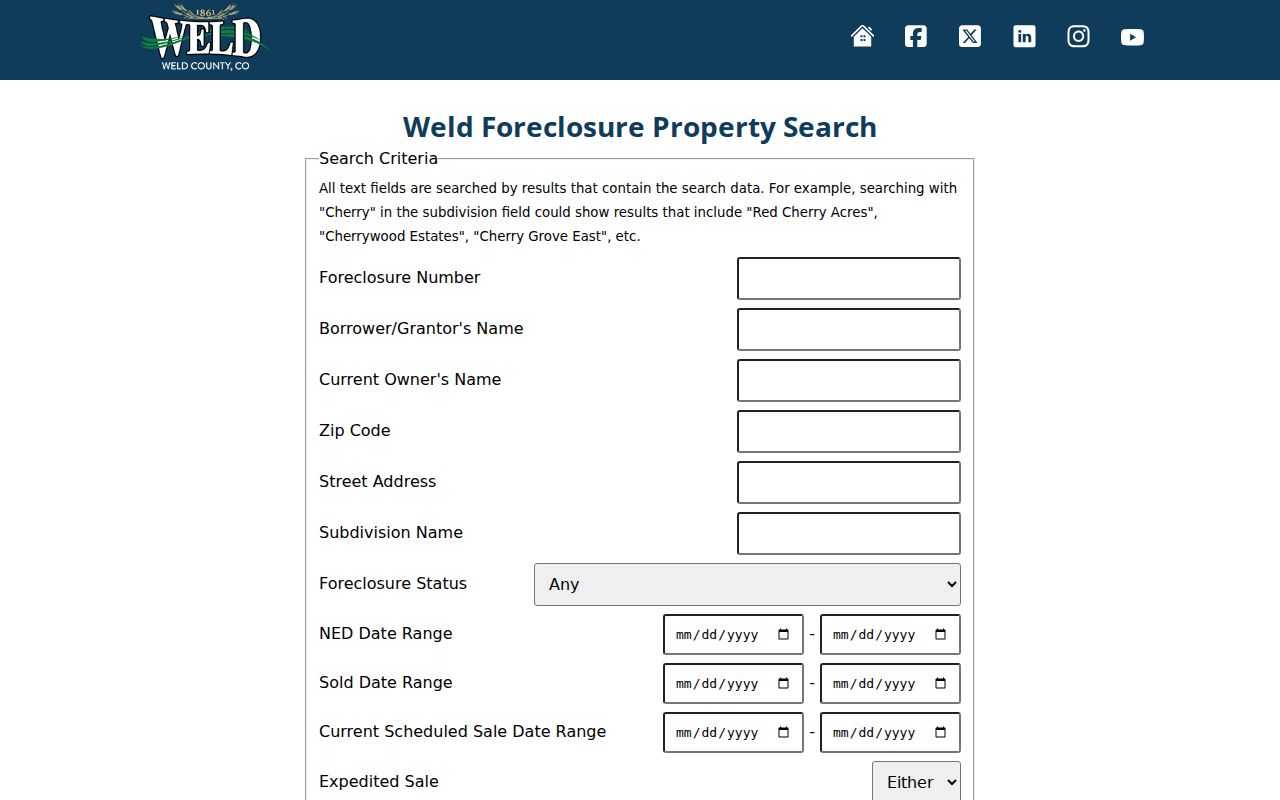
Use a foreclosure entry as a dated event in the address history, then check the later recorder deed before describing a change in ownership.
Greeley Previous Residents in Historical Sources
Once the deed trail gives a date, move to the historical occupant layer. Greeley targets include the 1871 Rocky Mountain Directory, 1892 Business and City Directory, April 1903 Tribune directory, and generally annual city and rural-route volumes. The 1866 county census, 1870 and 1880 federal census, 1885 Colorado census, 1900, 1910, and 1920 indexes add age, relationship, and household context.
Tribune obituary indexes cover selected runs from 1910 through 1999, and Greeley Sun indexes cover 1899-1908. Cemetery material includes Linn Grove burial applications for 1912-1930, church interments, and Weld County tombstone volumes. A directory occupant can be a past resident lead; a cemetery record can show death and family context; neither is a deed.
The historical stack is strongest when the same person appears in more than one dated source. A 1903 address can be paired with the 1900 or 1910 census, a newspaper page and column, a school or church directory, and a later deed or probate file. Preserve the street spelling before modernizing it. The WCMI index may point to a surname, page, cemetery volume, or newspaper entry, but the holding repository controls the scan, transcript, and access rule.
Greeley's county-seat history adds another reason to keep place names. Weld County records moved through St. Vrain, Latham, Evans, and Greeley before the 1877 resolution fixed Greeley as the seat. An early document can name a different courthouse even when the later address belongs to the same county.
The Weld Treasurer historical information page adds dated county tax material that may help place a parcel in an era.
Historical tax and directory evidence works best when every source is dated and its repository is named. That is the core discipline for a Greeley previous residents search.
Greeley Previous Residents and Sanborn Maps
The Library of Congress identifies a June 1886 Greeley and Weld County Sanborn fire-insurance map with related 1887, 1891, 1895, 1901, and 1906 editions. Local historic-preservation material also identifies later survey and update years. Sanborn sheets can show footprints, uses, street names, and block context. They do not name every resident or establish title.
Greeley's wide Union Colony grid makes a map comparison useful, but a specific citywide renumbering or street-renaming year was not verified. When an old address does not match, compare the street name, intersection, block and lot, legal description, Sanborn sheet, and current parcel geometry. Keep the old wording rather than modernizing it in the citation.
Water, rural routes, annexations, and the county-seat sequence can also change the surrounding record vocabulary. A Weld reference may point to St. Vrain, Latham, Evans, an early Greeley courthouse, or the present county-seat records route.
Greeley Previous Residents House History
The Hazel E. Johnson Research Center offers maps, historic photographs, newspapers, letters, diaries, oral histories, and staff research services. Greeley Historic Preservation maintains register material, building-history workshop resources, district nominations, and survey plans. The 8th Avenue historic survey is a local example that combines directory references, Sanborn years, building history, and architectural description.
Ask for the address as it appeared in the relevant year, the historic district or survey name, the legal description, and the exact collection or box. A staff answer may be a microfilm page number, catalog entry, or reference to a bound volume rather than a downloadable file.
The Greeley historic-preservation resources describe the house-history route.
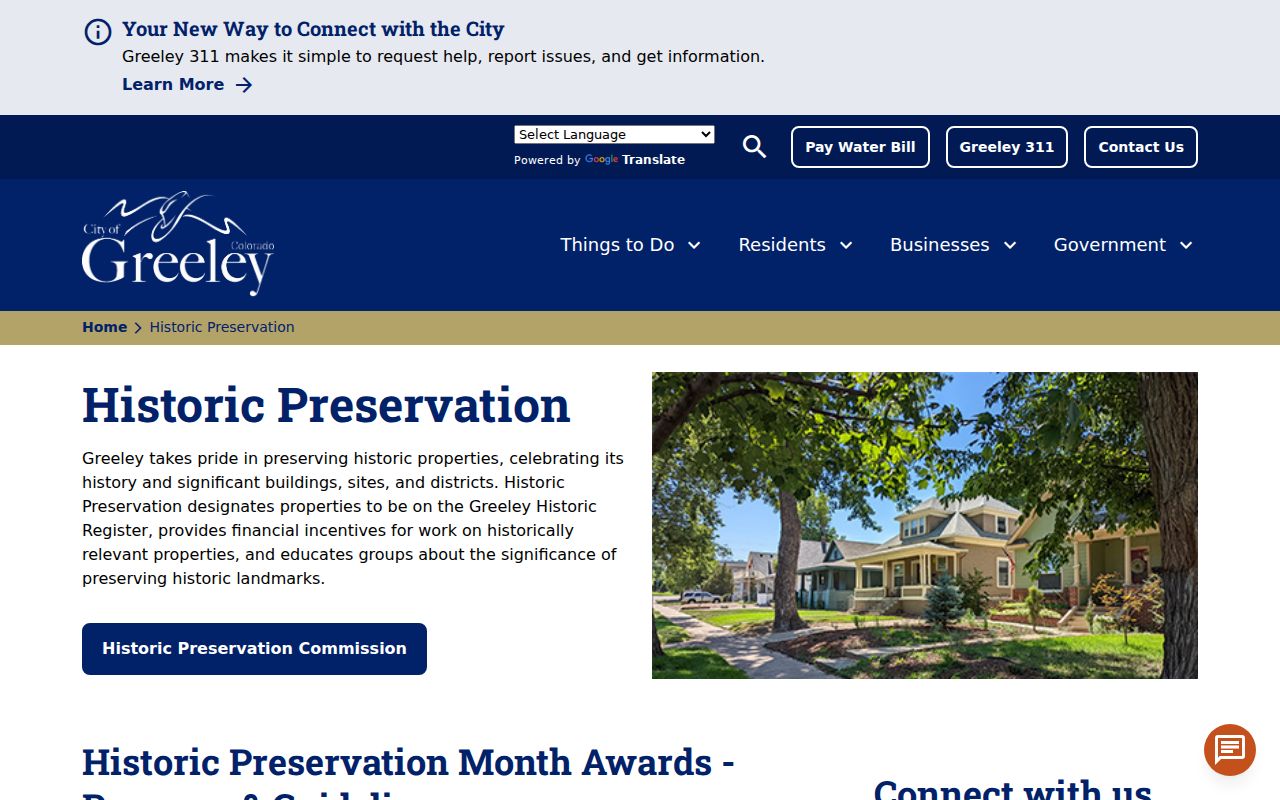
The preservation material links an address to building-history context without pretending that a historic survey is a current resident register.
Greeley Previous Residents: Occupants and Owners
Previous residents and previous owners are related but different questions. A directory, census, obituary, yearbook, or newspaper can place an occupant at an address. An assessor report or recorded deed can identify an owner of record. A permit or code case can name an applicant, contractor, or responsible party. Use the record's own label. The previous residents trail should never blur an occupant clue into title.
The Greeley address directory handles current parcel and street mechanics. The city directory collections handle the historical volumes themselves. A backward address trail can use both, but it should state which source supports which sentence.